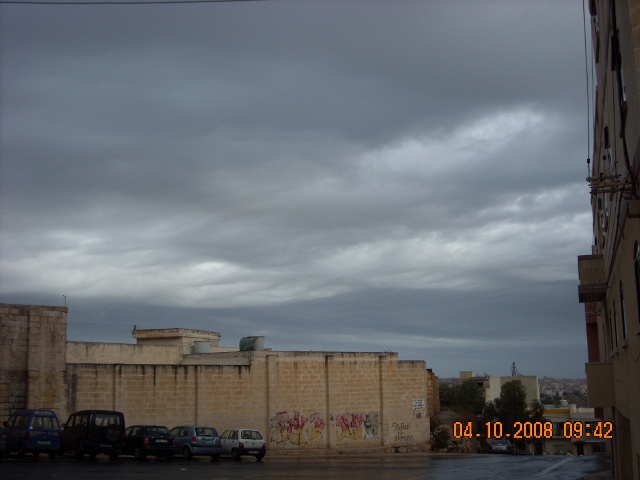

Altocumulus undulatus Ac un
Genus Altocumulus, Variety undulatus
- Photo
- Clinton Caruana
- Place
- Fgura, Malta · on the map
- Taken
- 4 October 2008, 09:42
Dark altocumulus in wave form: Altocumulus opacus undulatus.
How Altocumulus undulatus can form
The weather that day
Does the weather fit the cloud?
Altocumulus ✓ observed Observer at Luqa · 4 km · 11:00 Why?
- Observation: An observer at the Luqa station (4 km, 11:00) reports Altocumulus.
- Station measurement: Luqa (4 km, 12:00), likely: The instrument reports a layer at 3,300 m, 4/8 covered. Separate cloud patches at middle height: altocumulus.
Formation: Layer at middle height (2–6 km), usually a few hundred metres thick. Radiative cooling at the top and mixing create small overturning cells – hence clumps, rolls and waves.
How is this rated?
Observation before model: what an observer at a weather station reported counts for more than an estimate from a station’s instruments and more than the weather model. Each piece of information counts for less the farther away the station and the further from the time of the photo; the strongest comes first. The ERA5 reanalysis (grid point at the photo location, about 25 km grid spacing) only knows the cover per étage and values at the ground – its level is a rough estimate. As under “Sky now”, the satellite serves as an exclusion criterion: if it sees no matching cloud tops nearby, estimates count less; observations stay.
Seen from above photo taken 9:42 am
Sharp image from the Terra satellite (NASA), overpass at 11:51 am – 2 h 9 min after the photo. These satellites orbit over the poles and see a place only once or twice a day, but much sharper than the geostationary ones (“Coarse”, every 10–15 minutes).
More
More layers may lie below the top one: a cumulus with its base at 1 km often reaches up to 3 km. The satellite looks down on an area; the photo shows part of the sky from below.
The sky through the day
6:00
For comparison: ERA5 reanalysis
9:00
For comparison: ERA5 reanalysis
10:00 · hour of the photo
For comparison: ERA5 reanalysis
12:00
For comparison: ERA5 reanalysis
15:00
For comparison: ERA5 reanalysis
18:00
For comparison: ERA5 reanalysis
21:00
For comparison: ERA5 reanalysis
- ✓observed
- estimated: ●●● likely ●●○ quite possible ●○○ possible
- Photoalso in the photo
- Frame: station more than 20 or 50 km away
How to read the sky
- Times – click to see the sky at that hour. Below them the codes of the reported genera, grey = estimated only.
- clear = observer reports no clouds · none meas. = instrument detected none · ? = no data · – = partly hidden or without data (details on hover).
- ✓ = reported by a weather station, dots = estimated from height and cover (automatic measurement) or from the weather model. The bar next to the étage shows the cover.
- The card says where the information comes from – a station, the satellite or the weather model. Hover for the reasoning.
- The stations see their own sky – not necessarily the cloud in the photo.
Measurements at the time of the photo
Measured at Luqa (4 km SW), not where the photo was taken.
- Temperature
- 21.0 °C · Dew point 18.0 °C
- Humidity
- 83 %
- Wind
- from the north, 13 km/h (Beaufort 3)
- Precipitation
- 6.1 mm over the whole day
Course of the day
Data: NOAA, Copernicus/ECMWF, NASA · sources and licences
Sources: weather reports from the Integrated Surface Database of NOAA (NCEI), Luqa (4 km SW); ERA5 reanalysis by Copernicus/ECMWF (CC BY 4.0) via Open-Meteo. Sharp image: NASA Worldview/GIBS (Terra, MODIS Corrected Reflectance), overpass time from NASA’s granule search (CMR). Times in local time.
Similar photos
-
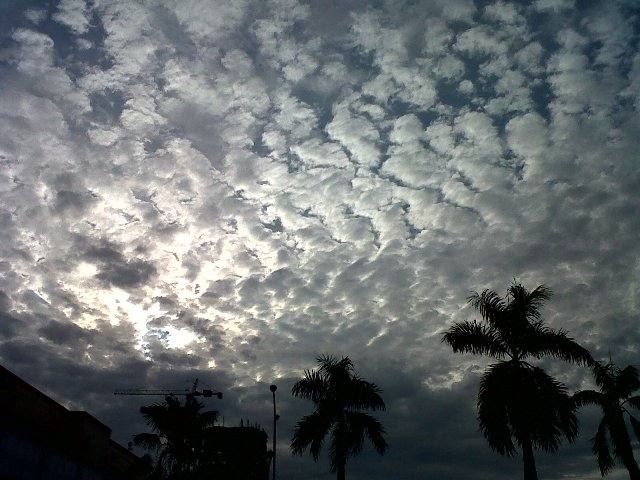 Altocumulus stratiformis perlucidus translucidus undulatus +2 Jakarta 2011
-
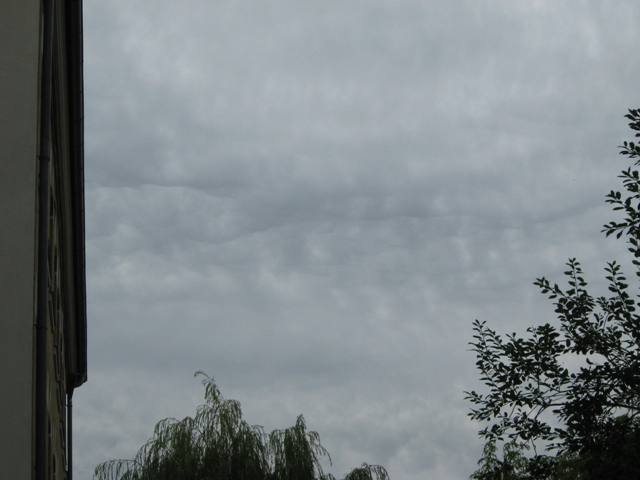 Altocumulus undulatus Leipzig 2011
-
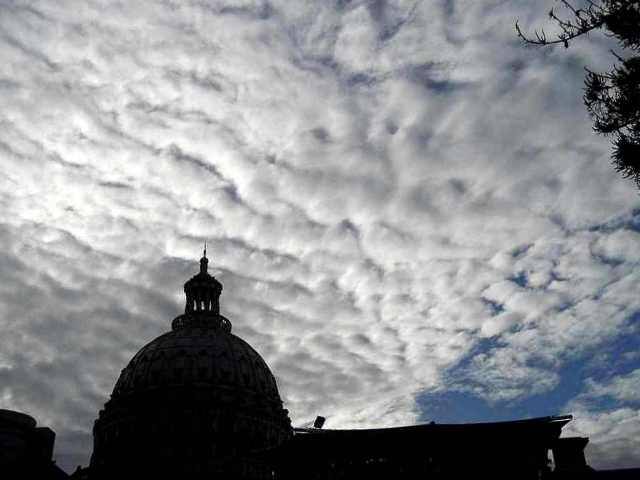 Altocumulus stratiformis undulatus translucidus perlucidus Bandung 2011
-
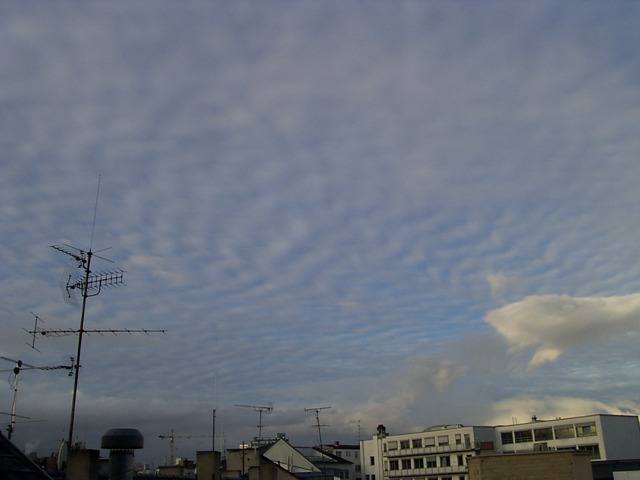 Altocumulus undulatus Mainz 2007
-
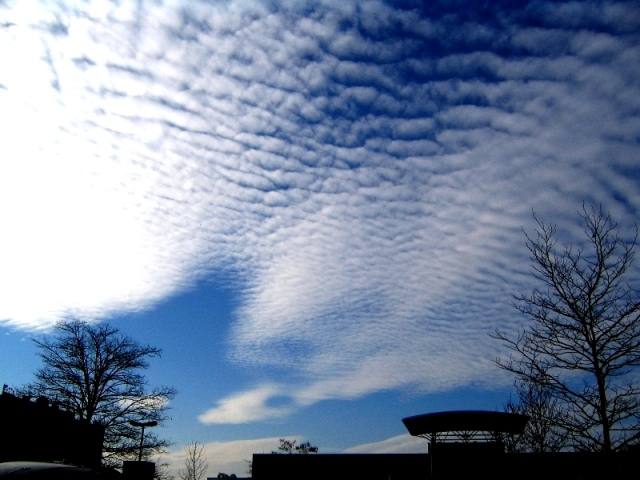 Altocumulus undulatus Wachau 2007
-
 Altocumulus undulatus +1 Port St. John 2007
-
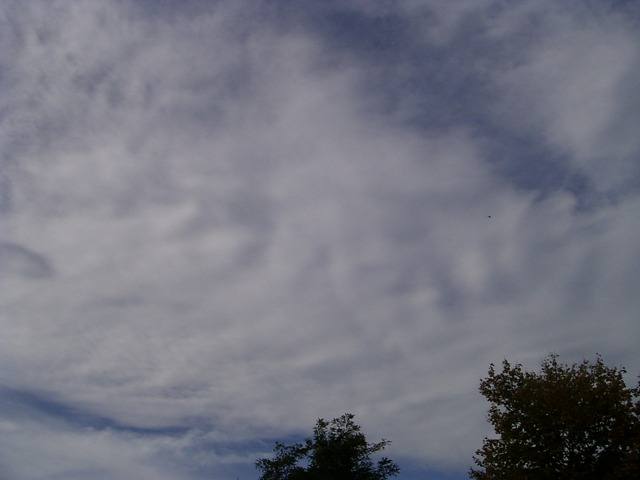 Altocumulus undulatus Leipzig 2006
-
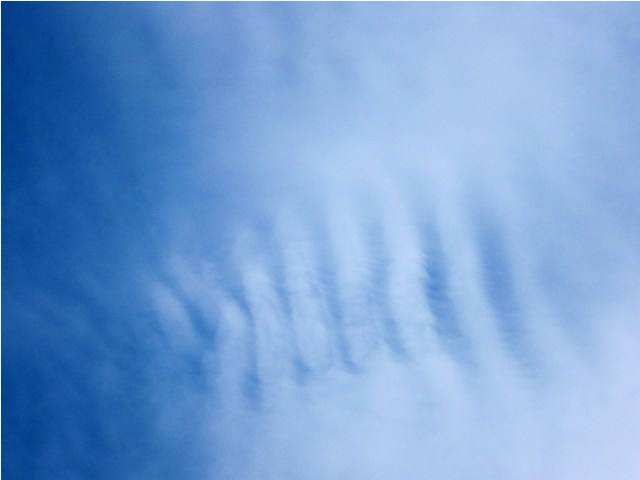 Altocumulus undulatus Jacksonville
Write a comment or ask a question about this photo
Every comment is read before it is published. Your email address is only needed for the confirmation link and a short message once the comment is online; it is deleted after that.