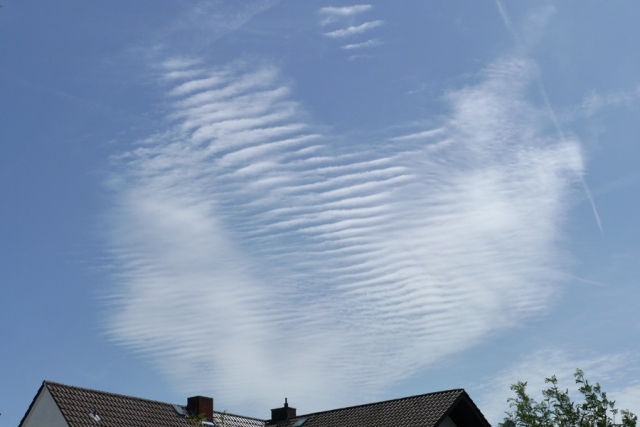
Cirrocumulus undulatus Cc un
Genus Cirrocumulus, Variety undulatus
- Photo
- Wilfried Mahr
- Location
- Darmstadt, Germany · on the map
- Taken
- 28 June 2012, 14:00
A cloud field of Cirrocumulus containing wave structures: Cirrocumulus undulatus. The difference from Cirrostratus undulatus is the sharp structures, which almost look like a washboard.
How Cirrocumulus undulatus can form
The weather that day
Seen from above photo taken 2:00 pm
Sharp image from the Aqua satellite (NASA), overpass at 2:08 pm – practically at the time of the photo. These satellites orbit over the poles and see a place only once or twice a day, but much sharper than the geostationary ones (“Coarse”, every 10–15 minutes).
More
More layers may lie below the top one: a cumulus with its base at 1 km often reaches up to 3 km. The satellite looks down on an area; the photo shows part of the sky from below.
The sky through the day
6:00
For comparison: ERA5 reanalysis
9:00
For comparison: ERA5 reanalysis
12:00
For comparison: ERA5 reanalysis
14:00 · hour of the photo
For comparison: ERA5 reanalysis
15:00
For comparison: ERA5 reanalysis
18:00
For comparison: ERA5 reanalysis
21:00
For comparison: ERA5 reanalysis
- ✓observed
- estimated: ●●● likely ●●○ quite possible ●○○ possible
- Photoalso in the photo
- Frame: station more than 20 or 50 km away
How to read the sky
- Times – click to see the sky at that hour. Below them the codes of the reported genera, grey = estimated only.
- clear = observer reports no clouds · none meas. = instrument detected none · ? = no data · – = partly hidden or without data (details on hover).
- ✓ = reported by a weather station, dots = estimated from height and cover (automatic measurement) or from the weather model. The bar next to the étage shows the cover.
- The card says where the information comes from – a station, the satellite or the weather model. Hover for the reasoning.
- The stations see their own sky – not necessarily the cloud in the photo.
Precipitation and lightning around the time of the photo
Large-scale weather pattern
High over the Norwegian Sea, anticyclonic HNa
Typical clouds in this pattern: Cumulus Stratocumulus
What does this mean?
A high over the Norwegian Sea and Iceland; central Europe is mostly under high pressure with winds from the north-east to east. Cool and rather dry, with cumulus and stratocumulus.
The weather pattern describes the flow over central Europe on that day – locally, the sky may have looked different.
Measurements at the time of the photo
Measured at the nearest weather stations, not where the photo was taken.
- Temperature
- 28.3 °C · Dew point 15.3 °C
- Humidity
- 45 %
- Wind
- from the south-east, 9 km/h (Beaufort 2)
- Precipitation
- 6.6 mm measured – incomplete record (22 of 24 hours)
Between 17:00 and 19:00 the temperature dropped by 4.7 °C.
Course of the day
Data: German Weather Service, Copernicus/ECMWF, NASA · sources and licences
Sources: observations and measurements from Deutscher Wetterdienst, the German weather service (CC BY 4.0), Darmstadt (2 km NE), Frankfurt/Main (20 km NW); weather pattern after Hess/Brezowsky from the DWD catalogue GWL-REA; ERA5 reanalysis by Copernicus/ECMWF (CC BY 4.0) via Open-Meteo. Sharp image: NASA Worldview/GIBS (Aqua, MODIS Corrected Reflectance), overpass time from NASA’s granule search (CMR). Radar: German Weather Service (CC BY 4.0). Times in local time.
Similar photos
-
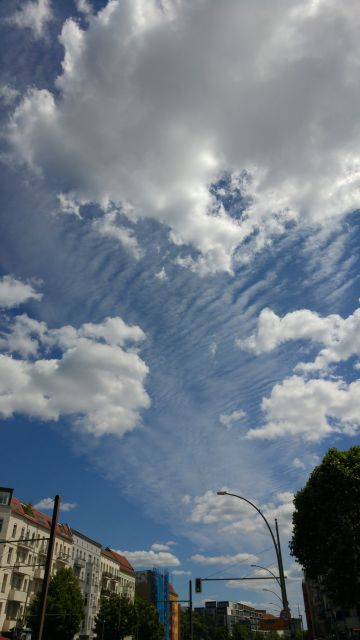 Cirrocumulus stratiformis undulatus +1 Berlin 2016
-
 Hole Punch Cloud, Cirrocumulus stratiformis undulatus, Stratus Gronau 2012
-
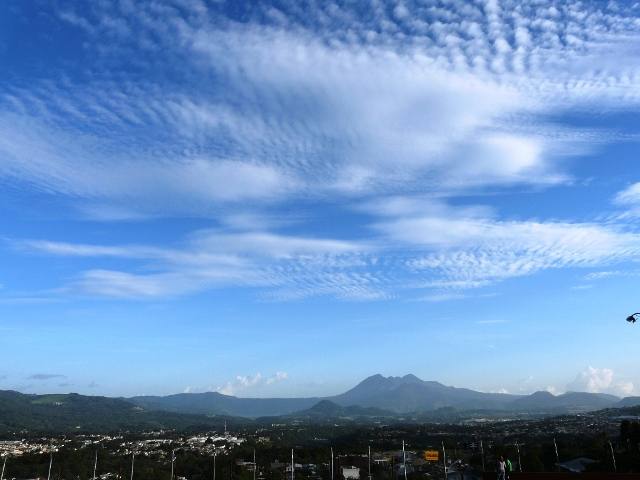 Cirrocumulus undulatus +2 Guatemala City 2009
-
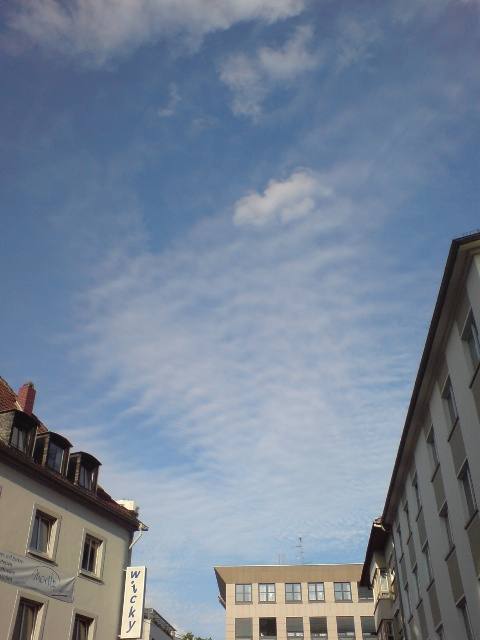 Cirrocumulus undulatus Mainz 2007
-
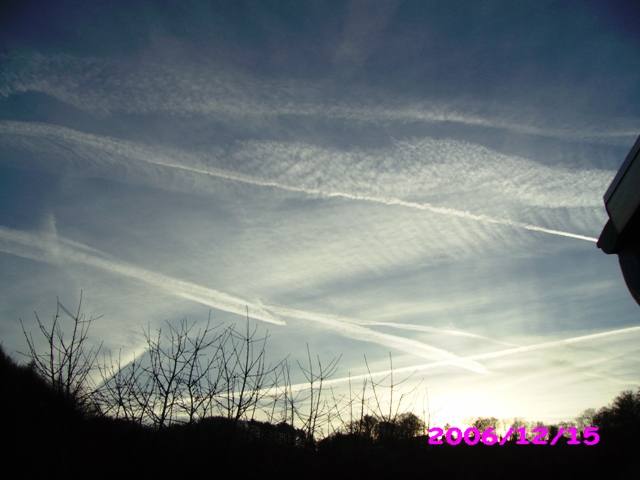 Cirrocumulus undulatus Rühle an der Weser 2006
-
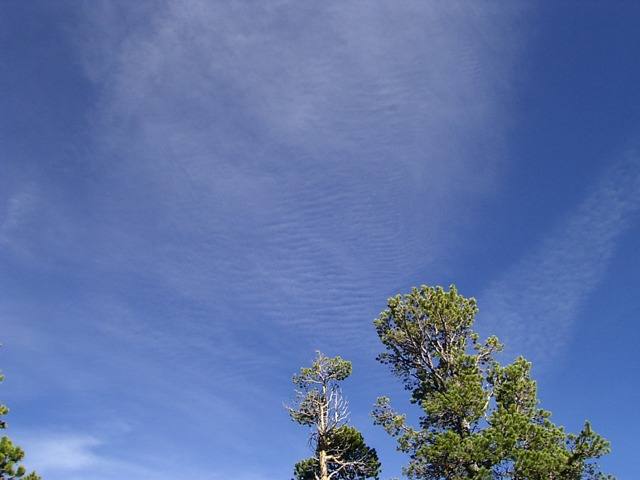 Cirrocumulus undulatus Rocky Mountains 2006
-
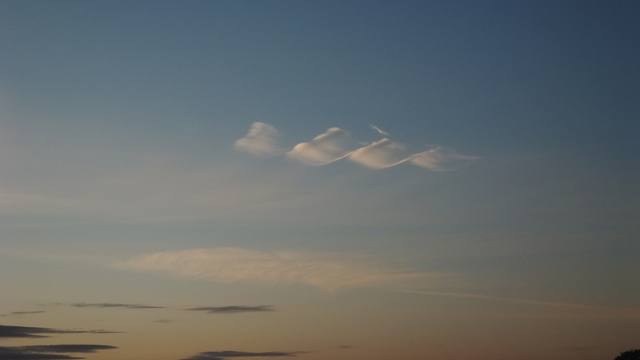 Cirrocumulus undulatus East Sussex
-
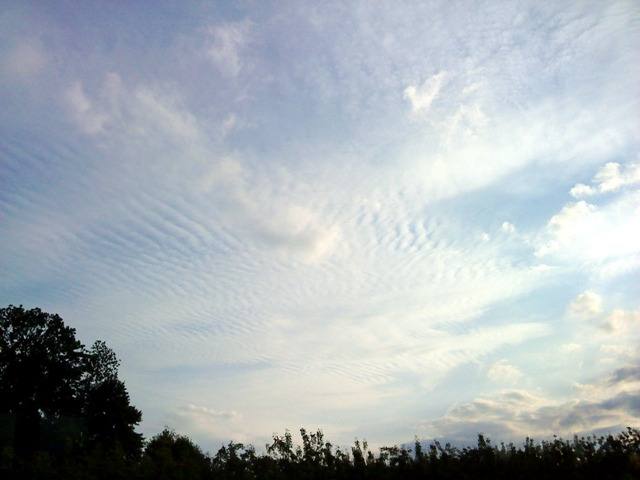 Cirrocumulus undulatus Hagnau
Write a comment or ask a question about this photo
Every comment is read before it is published. Your email address is only needed for the confirmation link and a short message once the comment is online; it is deleted after that.