
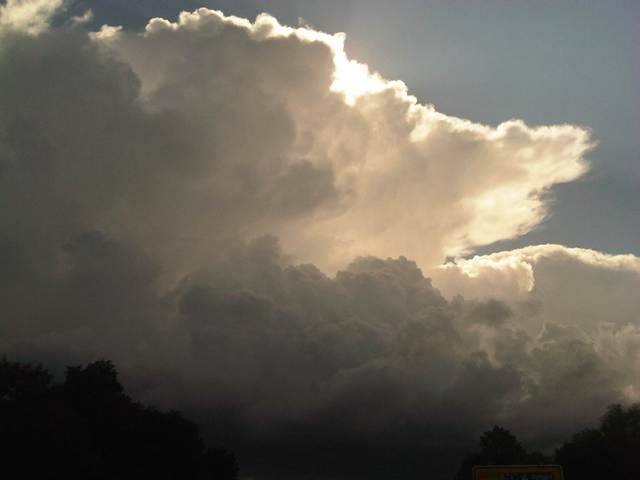
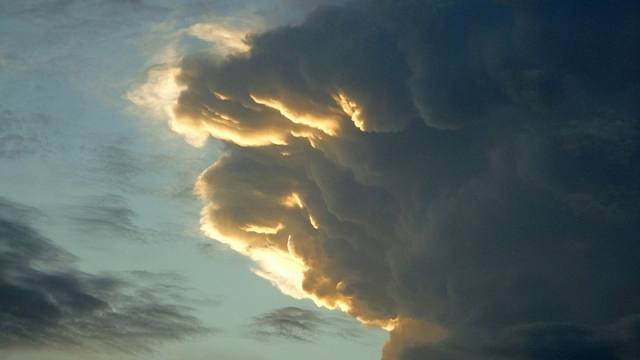
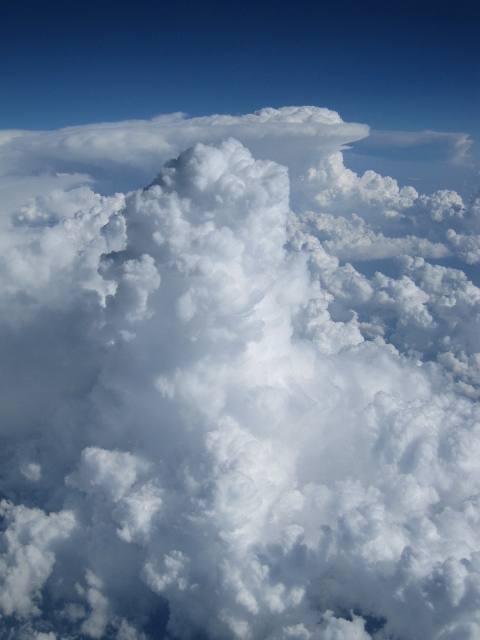
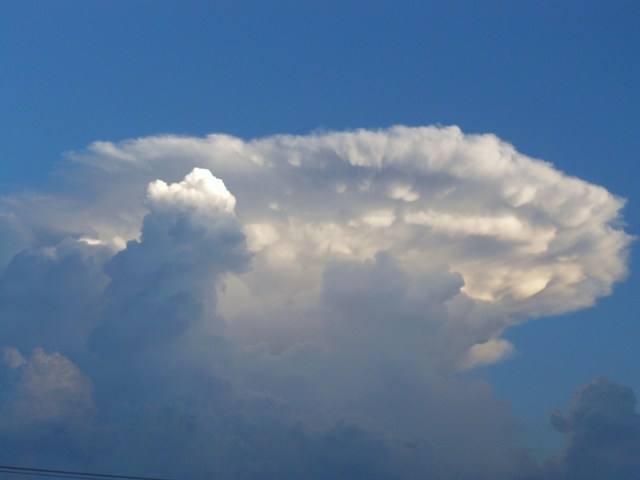
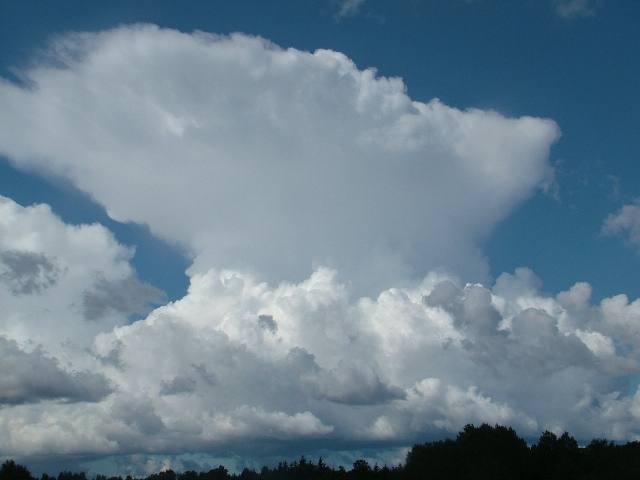
Cumulonimbus incus Cb inc
Genus Cumulonimbus, Supplementary feature incus
- Photo
- Rene Stich
- Location
- Lake Ossiach, Carinthia, Austria
- Taken
- 21 July 2010, 20:20
A well-developed Cumulonimbus incus with underlying Cumulus mediocris. At the edges of the top of the anvil-shaped Cumulonimbus, the cloud frays out in the center and on the right. These fringes are called capillatus.
The weather that day
Large-scale weather pattern
Upper trough over western Europe TrW
A trough of cold air aloft over western Europe, with central Europe on its front side in a warm, moist south-westerly flow. Typical of summer thunderstorm spells: altocumulus castellanus and floccus in the morning, cumulonimbus later on.
Typical clouds in this pattern: Altocumulus, Cumulonimbus, Cirrus, Altostratus
The weather pattern describes the flow over central Europe on that day – locally, the sky may have looked different.
The sky at nearby weather stations
In the photo: Cumulonimbus incus · 20:00
Codes = reported genera, grey = estimated only · clear = observer reports no clouds · none meas. = instrument detected none · ? = no data · – = partly hidden or without data (details on hover) · “Photo” = hour the photo was taken.
As under “Identify”: ✓ = reported by a weather station, dots = estimated from height and cover (automatic measurement). The stations see their own sky – not necessarily the cloud in the photo.
Measurements at the time of the photo
- Temperature
- 20.4 °C · Dew point 17.6 °C
- Humidity
- 84 %
- Wind
- from the east, 14 km/h (Beaufort 3)
Rule of thumb for the base of heap clouds: about 350 m above the station (125 m per degree between temperature and dew point).
Sources: weather reports from the Integrated Surface Database of NOAA (NCEI), Arriach (10 km NW); weather pattern after Hess/Brezowsky from the DWD catalogue GWL-REA; ERA5 reanalysis by Copernicus/ECMWF (CC BY 4.0) via Open-Meteo. Times in local time.

Write a comment or ask a question about this photo
Every comment is read before it is published. Your email address is only needed for the confirmation link and a short message once the comment is online; it is deleted after that.