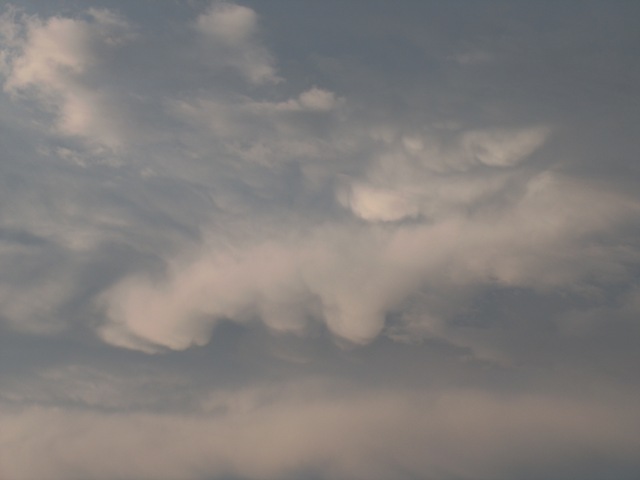

Stratocumulus mamma Sc mam
Genus Stratocumulus, Supplementary feature mamma
- Photo
- Cimpean Ioana
- Place
- Zalau, Romania · on the map
- Taken
- 8 September 2008, 18:19
In the centre of the photo there is a stratocumulus layer with protrusions on the underside of the cloud. These protrusions are called mamma or mammatus.
How Stratocumulus mamma can form
The weather that day
Does the weather fit the cloud?
Stratocumulus stratiformis quite possible Reanalysis · 20:00 Why?
- Reanalysis (20:00), quite possible: 30 % low, 24 % middle, 38 % high cloud. Low cloud without thermals reaching its base: stratocumulus.
Formation: Low layer of clumps or rolls beneath a stable layer (inversion). Forms through radiative cooling and mixing at the cloud top, or when heap clouds spread out under the inversion.
How is this rated?
Observation before model: what an observer at a weather station reported counts for more than an estimate from a station’s instruments and more than the weather model. Each piece of information counts for less the farther away the station and the further from the time of the photo; the strongest comes first. The ERA5 reanalysis (grid point at the photo location, about 25 km grid spacing) only knows the cover per étage and values at the ground – its level is a rough estimate. As under “Sky now”, the satellite serves as an exclusion criterion: if it sees no matching cloud tops nearby, estimates count less; observations stay.
Seen from above photo taken 6:19 pm
Sharp image from the Aqua satellite (NASA), overpass at 1:55 pm – 4 h 23 min before the photo. These satellites orbit over the poles and see a place only once or twice a day, but much sharper than the geostationary ones (“Coarse”, every 10–15 minutes).
More
More layers may lie below the top one: a cumulus with its base at 1 km often reaches up to 3 km. The satellite looks down on an area; the photo shows part of the sky from below.
The sky through the day
6:00
9:00
12:00
For comparison: ERA5 reanalysis
15:00
For comparison: ERA5 reanalysis
18:00 · hour of the photo
For comparison: ERA5 reanalysis
21:00
- ✓observed
- estimated: ●●● likely ●●○ quite possible ●○○ possible
- Photoalso in the photo
- Frame: station more than 20 or 50 km away
How to read the sky
- Times – click to see the sky at that hour. Below them the codes of the reported genera, grey = estimated only.
- clear = observer reports no clouds · none meas. = instrument detected none · ? = no data · – = partly hidden or without data (details on hover).
- ✓ = reported by a weather station, dots = estimated from height and cover (automatic measurement) or from the weather model. The bar next to the étage shows the cover.
- The card says where the information comes from – a station, the satellite or the weather model. Hover for the reasoning.
- The stations see their own sky – not necessarily the cloud in the photo.
Measurements at the time of the photo
Measured at Satu Mare (57 km N), not where the photo was taken.
- Temperature
- 19.0 °C · Dew point 17.0 °C
- Humidity
- 88 %
- Wind
- from the south-east, 7 km/h (Beaufort 2)
Between 15:00 and 17:00 the temperature dropped by 5.0 °C.
Course of the day
Data: NOAA, Copernicus/ECMWF, NASA · sources and licences
Sources: weather reports from the Integrated Surface Database of NOAA (NCEI), Satu Mare (57 km N); ERA5 reanalysis by Copernicus/ECMWF (CC BY 4.0) via Open-Meteo. Sharp image: NASA Worldview/GIBS (Aqua, MODIS Corrected Reflectance), overpass time from NASA’s granule search (CMR). Times in local time.
Similar photos
-
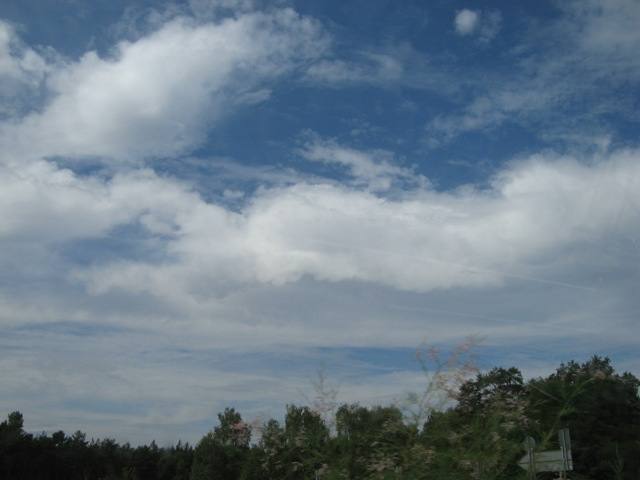 Stratocumulus mamma Germany 2010
-
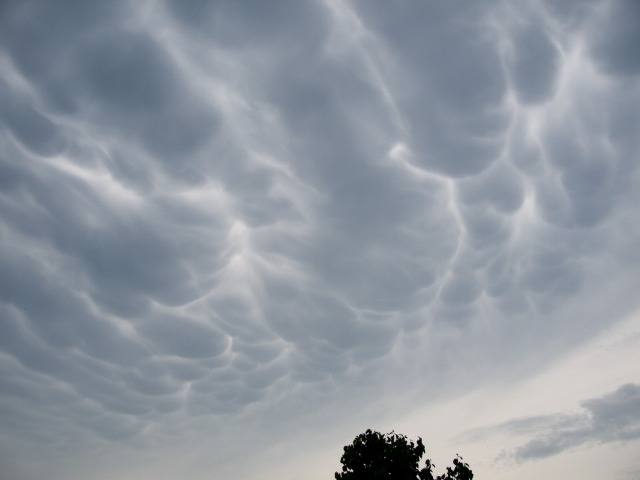 Stratocumulus mamma Hamburg 2009
-
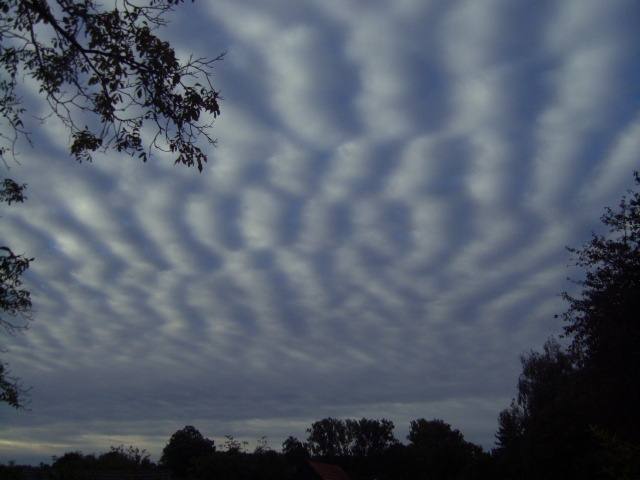 Stratocumulus undulatus Möhnesee 2012
-
 Stratocumulus stratiformis translucidus perlucidus Berlin Wannsee 2026
-
 Stratocumulus stratiformis perlucidus Wannsee 2020
-
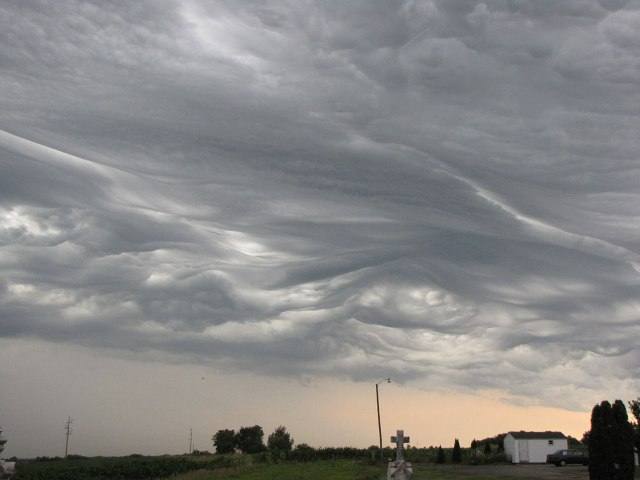 Stratocumulus asperitas St. Matthew's Cemetery 2012
-
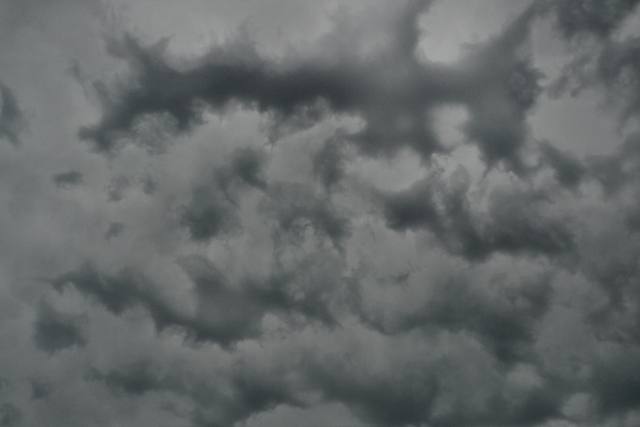 Stratocumulus lacunosus Darmstadt 2012
-
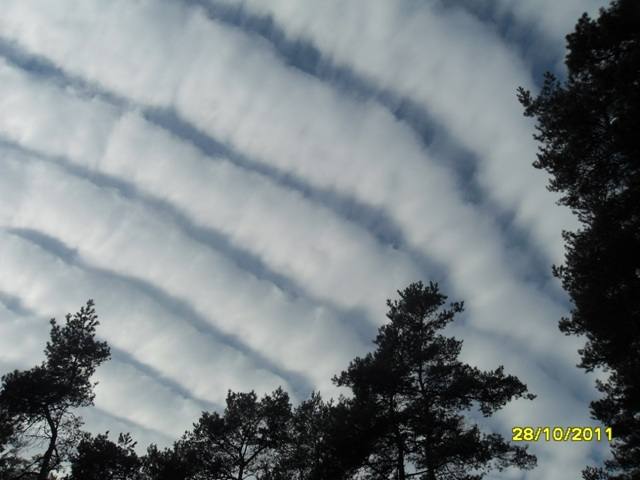 Stratocumulus undulatus Hademstorf 2011
Write a comment or ask a question about this photo
Every comment is read before it is published. Your email address is only needed for the confirmation link and a short message once the comment is online; it is deleted after that.